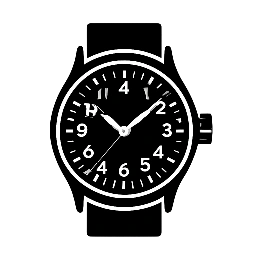
Article-At-A-Glance
- Pilot watches evolved from practical tools to status symbols, with the first true aviation timepiece created by Cartier for Alberto Santos-Dumont in 1904
- Legendary brands like IWC, Zenith, and Longines have over a century of aviation history, developing watches that helped pioneer long-distance flight
- Military specifications during WWII created the iconic B-Uhr design that influences modern pilot watches to this day
- High legibility, oversized crowns, and anti-magnetic cases are hallmark features of authentic pilot watches
- Dumarko Watches continues this rich tradition with modern pilot watches that honor aviation heritage while incorporating contemporary technology
The relationship between aviation and horology is one of necessity transformed into art. When early aviators took to the skies in open cockpits with minimal instrumentation, their watches became crucial navigation tools rather than mere accessories. This marriage of function and form has created some of the most enduring timepiece designs in history.
In the cockpits of early 20th-century aircraft, where pilots faced extreme conditions and split-second decisions, specialized timepieces became as essential as the compass or altimeter. From timing fuel consumption to executing precise navigation, these watches weren’t luxury items but survival gear. Dumarko Watches continues this tradition today, creating timepieces that honor this rich aviation heritage while meeting modern standards of precision and durability.
The Birth of Pilot Watches: How Necessity Created Legends
The story of aviation watches begins in the early 1900s, when flying itself was still a dangerous novelty. Early aviators quickly discovered that pocket watches were impractical in cockpits, requiring pilots to remove their hands from critical controls. This dangerous limitation sparked innovations that would forever change the watch industry and create a new category of timepieces designed specifically for flight.
As aviation advanced from brief demonstration flights to genuine long-distance travel, the demands placed on pilots’ timepieces grew exponentially. Manufacturers responded with innovations that would become defining characteristics of the pilot watch genre: oversized dials for instant readability, luminous hands and markers for night flights, and robust cases to withstand vibration and temperature fluctuations. These early adaptations established design principles that remain influential more than a century later, as seen in modern models like the Kiel 2 Schwarz.
Cartier Santos: The First Purpose-Built Pilot Watch
The foundation of aviation horology can be traced to a friendship between two pioneering figures: Brazilian aviator Alberto Santos-Dumont and French jeweler Louis Cartier. Their collaboration would produce not just the first pilot watch, but revolutionize how all wristwatches were perceived and worn.
Alberto Santos-Dumont’s Flight Problem
In 1904, Alberto Santos-Dumont was already famous for his daring flights in dirigibles and early aircraft around Paris. As he pushed the boundaries of early aviation, he encountered a practical problem: checking a pocket watch while maintaining control of his experimental aircraft was nearly impossible and potentially dangerous. Santos-Dumont needed a solution that would allow him to time his flights precisely without removing his hands from the controls.
Louis Cartier’s Revolutionary Solution
Responding to his friend’s challenge, Louis Cartier designed what would become the world’s first purpose-built wristwatch for aviators. While wristwatches existed previously (primarily as decorative jewelry for women), the Santos watch represented something entirely new—a practical instrument designed for a specific professional application. The square case, exposed screws, and integrated bracelet created a distinctive aesthetic that broke completely from pocket watch traditions.
When Santos-Dumont wore his Cartier timepiece during a record-setting flight in 1906, he not only validated its practical application but unwittingly initiated a massive shift in how men would wear watches. Almost overnight, wristwatches transformed from feminine accessories to essential tools for modern men of action.
Though it might appear conservative to modern eyes, the Santos-Dumont watch was revolutionary in its time, featuring a square case that departed dramatically from the circular pocket watches that dominated the era. Its exposed screws and integrated bracelet established a design language that continues to influence Cartier and countless other watchmakers more than a century later.
Design Elements That Changed Watchmaking
The Cartier Santos established several design principles that would influence all future pilot watches. Its square case maximized dial space for optimal readability, while the contrast between black numerals and white background ensured instant time recognition. Perhaps most significantly, its integrated bracelet and secure attachment to the wrist represented a complete rethinking of how timepieces could be worn in active environments.
- Square case design maximizing dial legibility
- High-contrast numerals for instant readability
- Secured wrist attachment that wouldn’t shift during flight
- Robust case construction to withstand cockpit vibrations
Though modern pilot watches have evolved significantly since this first collaboration between aviator and watchmaker, the fundamental principle remains unchanged: these timepieces must serve as reliable instruments first and fashion accessories second. This pragmatic heritage is what continues to attract enthusiasts to aviation watches over a century later.
Zenith’s Aviation Legacy: From Blériot to Modern Skies
While Cartier may have created the first pilot-specific timepiece, Zenith can claim one of aviation’s most historic endorsements. In 1909, Louis Blériot made history as the first person to fly across the English Channel, a 37-minute journey that changed perceptions about aviation’s practical possibilities. Strapped to his wrist during this pioneering flight was a Zenith timepiece, creating one of horology’s most authentic connections to aviation history.
Unlike some brands that later developed aviation marketing narratives, Zenith’s connection to flight was organic and immediate. Blériot’s own testimonial—”I am very satisfied with the Zenith watch, which I usually use, and I cannot recommend it too highly to people who are looking for precision”—provided the kind of authentic endorsement no amount of advertising could purchase.
The Historic English Channel Crossing
When Louis Blériot prepared for his historic Channel crossing on July 25, 1909, reliability was paramount. His aircraft, the Blériot XI monoplane, was experimental technology, and every component needed to perform flawlessly in the challenging conditions over water. His choice of the Zenith timepiece reflected its reputation for precision and durability, qualities that would be tested during the turbulent flight.
The successful crossing transformed both aviation and Zenith’s trajectory in watchmaking. Almost immediately, the company began emphasizing its connection to this historic achievement, incorporating aviation themes into its marketing and product development. This authentic link to early flight would remain a cornerstone of Zenith’s brand identity throughout the following century.
Evolution of Zenith Pilot Watches
Following Blériot’s achievement, Zenith expanded its aviation-focused timepieces throughout the 1920s and 30s. The company developed specialized pilot chronographs with oversized crowns that could be operated while wearing gloves and extra-large luminous numerals for night flying. These practical innovations were born from direct feedback from the growing community of professional aviators who relied on Zenith timepieces.
During World War II, Zenith supplied watches to various air forces, further cementing its aviation credentials. These military-spec timepieces featured black dials with high-contrast white markings, reinforced cases to withstand cockpit vibrations, and antimagnetic protection for greater accuracy near aircraft instrumentation. The stringent requirements of military aviation pushed Zenith to develop increasingly durable and precise movements. For those interested in exploring similar timepieces, the Frankfurt GMT Schwarz model offers a modern take on classic pilot watches.
Modern Zenith Pilot Collections Worth Exploring
Today’s Zenith Pilot collection draws direct inspiration from these historic timepieces while incorporating modern watchmaking advances. The Zenith Pilot Type 20 series, with its distinctive onion crown and vintage-inspired aesthetic, pays homage to the early days of aviation while housing contemporary high-frequency El Primero movements. These watches maintain the oversized dimensions and bold legibility of their predecessors while offering chronometric performance that early aviators could only dream of.
What distinguishes Zenith from many competitors is the authenticity of its aviation heritage. Unlike brands that adopted pilot’s watch aesthetics for marketing purposes, Zenith’s designs evolved organically from real-world flying requirements established over a century of continuous production.
Longines: Timekeepers of Aviation’s Golden Age
Few watch manufacturers can match Longines’ comprehensive contribution to aviation timekeeping. The Swiss brand not only created groundbreaking navigation instruments but established timing systems for aviation records and competitions throughout the 1920s and 30s. This multifaceted involvement made Longines an integral part of aviation’s development during its most romantic and innovative period.
The company’s reputation for precision made it the natural choice for aviators pushing the boundaries of flight. As pilots attempted increasingly ambitious long-distance journeys, reliable navigation became critical, and Longines responded with specialized instruments designed specifically for aeronautical challenges.
The Lindbergh Hour Angle Watch
After Charles Lindbergh completed his historic solo transatlantic flight in 1927, he approached Longines with specifications for a navigation watch that would solve problems he encountered during his journey. The resulting Hour Angle Watch, released in 1931, represented a quantum leap in aviation timekeeping. This wasn’t merely a watch with aviation styling—it was a sophisticated navigation instrument that allowed pilots to calculate longitude during long-distance flights.
The Hour Angle featured a rotating bezel that, when used in conjunction with the watch’s hands and a sextant, enabled pilots to determine their precise position relative to the Greenwich meridian. This functionality was revolutionary for its time, essentially placing a navigation computer on the wrist decades before electronic aids would become available. For those interested in similar innovations, the Frankfurt GMT Schwarz model offers a modern take on these classic features.
“I designed this watch for myself. It embodies everything a pilot needs in a timepiece. It proved extremely accurate and reliable in the most trying conditions of my long-distance flights.”
— Charles Lindbergh on his Longines Hour Angle Watch
Weems Second-Setting Watch
Before collaborating with Lindbergh, Longines had already developed the Weems Second-Setting Watch with U.S. Naval officer Philip Van Horn Weems. This innovative timepiece featured a rotating inner bezel that allowed pilots to synchronize their watch precisely with radio time signals—critical for accurate celestial navigation. The Weems system addressed the crucial problem of chronometric precision during long flights, where even small timing errors could result in significant navigational deviations.
The technical sophistication of these early Longines aviation watches demonstrated the company’s deep understanding of pilots’ practical needs. Unlike decorative pilot watches that would emerge later, these were working tools designed in collaboration with the aviators who would stake their lives on their accuracy.
Longines’ Continued Aviation Heritage
Throughout the golden age of aviation, Longines maintained its position as the preferred timekeeper for record attempts and aeronautical competitions. The company’s timing equipment was used to certify countless aviation milestones, including speed and distance records that pushed the boundaries of what was possible in the air. This official timing capacity gave Longines unparalleled insight into aviation’s evolving requirements.
Today’s Longines Aviation Collection, particularly the Heritage line, draws direct inspiration from these historic models. Modern reissues of the Hour Angle and Weems watches offer contemporary reliability while maintaining the distinctive design language and functional features that made the originals so valuable to pioneering aviators.
IWC’s Military Might: The B-Uhr Legacy
If Cartier, Zenith and Longines represent the civilian and navigational origins of pilot watches, IWC embodies their military evolution and standardization. The company’s involvement with aviation timepieces took a significant turn in the late 1930s when the German Luftwaffe sought to standardize watch specifications for its pilots, resulting in the legendary Beobachtungsuhr (B-Uhr) design that continues to influence pilot watches today.
Unlike earlier aviation watches that were often adaptations of existing designs, the B-Uhr represented a purpose-built military specification created with a singular focus: absolute legibility and reliability for combat navigation. The result was a timepiece of unprecedented size and clarity that would forever change how pilot watches were designed.
The Fliegerchronograph Story
Prior to the B-Uhr commission, IWC had already established itself in aviation circles with the Fliegerchronograph (pilot’s chronograph) models of the 1930s. These watches featured stark black dials, highly legible white markings, and robust movements capable of withstanding the extreme conditions encountered in unpressurized cockpits. What distinguished these early IWC pilot watches was their uncompromising focus on functionality over decoration—a philosophy that continues to define the brand’s approach to this day.
As military aviation advanced, so did the technical requirements for the watches that supported it. Chronograph functions became increasingly important for timing flight legs, fuel consumption, and bombing runs. IWC’s expertise in producing these specialized movements positioned the company perfectly for the next evolutionary step in military aviation timepieces.
Big Pilot’s Watch Evolution
The B-Uhr specification called for watches of exceptional size (55mm diameter) with distinctive design elements: an oversized diamond-shaped crown for operation with gloves, extra-long straps for wear over flight jackets, and antimagnetic protection to maintain accuracy near aircraft instruments. IWC was among the handful of manufacturers selected to produce these watches, cementing its place in aviation watch history.
These oversized timepieces featured either the Type A dial (with numerals from 1-11 and a triangle at 12) or the later Type B dial (with an outer ring of minutes and smaller hour numerals inside). Both configurations prioritized precise reading of minutes—critical for navigation calculations—and established design codes that would influence pilot watches for generations.
| B-Uhr Feature | Military Purpose | Modern Influence |
|---|---|---|
| 55mm Case Size | Maximum legibility in cockpit conditions | Oversized cases (though typically 42-46mm in modern watches) |
| Triangle at 12 O’clock | Instant orientation in any light condition | Standard feature on most pilot watches today |
| Diamond-shaped Crown | Operation while wearing thick flight gloves | Oversized, fluted crowns on modern pilot watches |
| Iron Inner Case | Protection from aircraft magnetic fields | Enhanced antimagnetic properties in premium pilot watches |
Mark Series Development
IWC’s aviation legacy extended beyond the original B-Uhr with the development of the Mark series timepieces. Beginning with the Mark IX in the late 1930s, these watches were designed specifically for Royal Air Force pilots and navigators. Unlike the massive B-Uhr, the Mark series offered more wearable dimensions while maintaining exceptional legibility and precision.
The Mark XI, introduced in 1948, became particularly legendary among military watch enthusiasts. Produced under strict RAF specifications, it featured an antimagnetic case, highly precise movement with hacking seconds, and a dial design optimized for split-second readability. For nearly 40 years, the Mark XI served faithfully in multiple air forces, establishing a reputation for reliability in the most demanding conditions.
Modern Big Pilot Collections
Today’s IWC Big Pilot’s Watch pays direct homage to those original B-Uhr designs while incorporating contemporary watchmaking advances. The modern collection maintains key historical elements—the distinctive conical crown, highly legible dial with triangle at 12 o’clock, and robust construction—while offering sophisticated in-house movements and premium materials. Despite the historical styling, these are thoroughly modern timepieces built to IWC’s exacting standards.
The enduring appeal of the Big Pilot lies in its uncompromising commitment to the original mission: absolute legibility and reliability. In an era of complicated watch designs, its purposeful simplicity stands as a testament to the enduring principles of aviation timepiece design. Even as IWC has expanded the collection with various complications and materials, the core design language remains remarkably faithful to those wartime originals.
Breitling: Navigation Tools for the Skies
While other manufacturers focused on time-telling and basic chronograph functions, Breitling recognized that pilots needed specialized calculation tools for complex in-flight computations. This insight led to the development of what would become aviation’s most recognizable watch: the Navitimer.
Birth of the Navitimer
Introduced in 1952, the Breitling Navitimer revolutionized pilot watches by incorporating a functional circular slide rule bezel that enabled pilots to perform critical calculations without additional equipment. This wasn’t merely a stylistic choice—it was a genuine navigational computer for the wrist, capable of handling multiplication, division, and conversion calculations essential for flight planning and execution.
The name itself—a combination of “navigation” and “timer”—perfectly captured the dual functionality that set it apart from conventional chronographs. During an era when electronic calculators didn’t exist and cockpits had limited space, having these capabilities literally at hand provided pilots with a significant operational advantage. For more on pilot watches, explore the Ulm handwinding pilot watches.
The Slide Rule Revolution
The logarithmic slide rule incorporated into the Navitimer’s rotating bezel allowed pilots to calculate fuel consumption, airspeed, time/distance ratios, and various unit conversions with remarkable precision. Mastering this miniature computer required practice, but for professional pilots who used these calculations regularly, the Navitimer became an indispensable cockpit tool rather than merely a timekeeper.
While digital instruments have long since replaced the need for these manual calculations, the slide rule bezel remains an iconic feature of the Navitimer and a tangible connection to aviation’s analog era. Modern pilots may wear the Navitimer more for its heritage than practical necessity, but the functionality remains fully operational—a working museum piece on the wrist.
Partnerships with Aviation Groups
Breitling solidified its aviation credentials through strategic partnerships with professional pilot organizations. Most notably, the Aircraft Owners and Pilots Association (AOPA) adopted the Navitimer as its official timepiece, even incorporating its winged logo on early Navitimer dials. This endorsement from the world’s largest pilot organization provided unimpeachable credibility and helped establish the Navitimer as the quintessential pilot’s watch.
Throughout the decades, Breitling maintained and expanded these aviation connections, sponsoring aerobatic teams, air races, and restoration projects for historic aircraft. These weren’t merely marketing exercises but reflections of the company’s genuine integration into aviation culture—a relationship that continues to this day.
Emergency Models and Their Real-World Rescues
In 1995, Breitling pushed the boundaries of pilot watch functionality with the introduction of the Emergency—the first wristwatch with a built-in emergency locator transmitter. This revolutionary timepiece could broadcast a distress signal on the international aircraft emergency frequency, potentially summoning rescue for downed pilots. Far from a theoretical gimmick, the Emergency has been credited with numerous real-world rescues, including the 2003 salvation of two British helicopter pilots who crashed in Antarctica. For those interested in exploring other special pilot watch models, there are several options available.
The Emergency represented a fundamentally different approach to pilot watch design, prioritizing survival functionality over traditional navigational tools. This innovation demonstrated Breitling’s ongoing commitment to addressing the evolving needs of aviators rather than simply trading on historical associations.
Stowa and Laco: The Other B-Uhr Manufacturers
While IWC may be the most recognized producer of the original B-Uhr watches, German manufacturers Stowa and Laco (originally Lacher & Co.) were equally important suppliers of these critical military instruments. Along with A. Lange & Söhne and Wempe, these companies produced thousands of nearly identical observation watches according to exacting Luftwaffe specifications during World War II.
Type A vs. Type B Dials
The original B-Uhr watches were produced with two distinct dial configurations known as Type A and Type B. Type A featured a straightforward layout with large Arabic numerals from 1-11 and the distinctive triangle at 12 o’clock. Type B, introduced later in the war, utilized a more complex “deck watch” arrangement with an outer minute track featuring prominent 5-minute increments and smaller hour numerals positioned inside. For those interested in modern interpretations, the Aachen 42 MB offers a contemporary take on these classic designs.
Both Stowa and Laco produced both variants, with their watches differing only in subtle details like the finishing of movements and minor case variations. The remarkable consistency across manufacturers highlights the strictly standardized nature of these military instruments—form following function in its purest expression. For those interested in exploring similar models, the Kiel 2 Schwarz offers a modern take on classic pilot watch design.
Post-War Developments
Unlike IWC, which maintained continuous production throughout the post-war period, both Stowa and Laco faced significant challenges after 1945. Laco was particularly hard-hit, with its facilities damaged during Allied bombing campaigns and eventually absorbed into another company. For decades, these historic B-Uhr manufacturers faded from prominence in the watch industry, with their wartime contributions largely forgotten by all but the most dedicated collectors.
The quartz crisis of the 1970s further complicated their recovery, delaying the revival of their aviation heritage until the mechanical watch renaissance of the 1990s. This turbulent history makes their modern resurgence all the more remarkable.
Modern Interpretations of Classic Designs
Today, both Stowa and Laco have embraced their B-Uhr heritage, offering faithful reproductions of their wartime designs alongside contemporary interpretations. These modern versions typically feature more wearable case sizes (40-45mm compared to the original 55mm), upgraded movements, and enhanced water resistance, but maintain the unmistakable design language that defines the observation watch genre.
For collectors seeking authentic pilot watch heritage at accessible price points, these German manufacturers offer compelling alternatives to their Swiss counterparts. Their direct historical connection to the original B-Uhr specification provides legitimacy that many larger brands cannot claim, despite more modest brand recognition.
Key Design Features That Define True Pilot Watches
Beyond specific brands and models, certain design elements have become hallmarks of authentic aviation timepieces. These features evolved directly from the practical requirements of early flight and continue to define the genre even as modern cockpit instrumentation has eliminated their necessity. For instance, the Wurzburg model exemplifies these timeless characteristics.
Oversized Crowns and Their Purpose
The distinctive large crowns found on pilot watches weren’t a stylistic choice but a practical necessity for aviators wearing thick gloves in unheated cockpits. These substantial, often fluted or “onion” shaped crowns enabled precise adjustment without removing hand protection—a critical consideration when temperatures at altitude could plummet well below freezing. Modern pilot watches maintain this design feature more as a heritage element, though it remains useful for ease of operation and contributes significantly to the genre’s recognizable profile.
High-Contrast Dials for Instant Readability
The stark black dials with white markings that characterize most pilot watches were developed to provide maximum legibility under variable cockpit lighting conditions. This high-contrast approach reduced the time needed to read the watch—often critical during complex flight maneuvers or navigation calculations. The design principle is simple: eliminate anything that doesn’t contribute to instant time recognition.
This commitment to legibility extends to the hands, which are typically sword-shaped or baton-style to provide maximum surface area for luminous material. The minute hand is often emphasized, reflecting its greater importance for navigation timing compared to the hour hand. For more on pilot watch designs, check out the Kiel 2 MB Schwarz model.
Anti-Magnetic Cases: Why They Matter
Early aircraft cockpits were filled with instruments generating magnetic fields that could severely impact mechanical watch accuracy. To combat this interference, manufacturers developed antimagnetic cases with soft iron inner shields that protected the movement from these disruptive forces. For military pilots relying on precise timing for navigation and coordination, this protection wasn’t merely a convenience but a mission-critical feature. Learn more about the history of pilot watches and their essential features.
Even in the era of quartz and digital instruments, this heritage of antimagnetic protection continues in premium pilot watches. Modern cockpits contain substantially more electronic equipment generating stronger magnetic fields, making this historical feature surprisingly relevant for contemporary pilots.
The highest-grade pilot watches today often exceed standard antimagnetic protections, with some models resistant to fields exceeding 1,000 gauss—far beyond what early watchmakers could have imagined. This continuing evolution demonstrates how authentic pilot watches maintain their core mission of providing reliable timekeeping in challenging aviation environments.
“In-flight navigation required precision that could mean the difference between reaching your destination or running out of fuel over open ocean. Your watch wasn’t an accessory—it was essential equipment that had to perform flawlessly under extreme conditions.”
— Captain Eric Brown, Test Pilot and Naval Aviator
Navigation Bezels and Slide Rules
While not present on all pilot watches, specialized rotating bezels evolved to support aviation-specific calculations. From simple elapsed time tracking to the complex logarithmic slide rules of the Navitimer, these interactive components transformed watches from passive timekeepers into active computational tools. Modern pilot watches maintain these features even as their practical necessity has diminished, preserving both the functional capability and the distinctive aesthetic that sets aviation timepieces apart.
How to Start Your Aviation Watch Collection Today
The rich heritage and distinctive design language of pilot watches make them compelling candidates for focused collection. Whether drawn to their historical significance, technical innovations, or simply their bold aesthetics, collectors find that aviation timepieces offer remarkable depth for specialized collecting.
A thoughtful approach to building an aviation watch collection might begin with representative examples from different eras or design philosophies. From early navigation watches to military observation pieces to modern interpretations, each category tells a different chapter in the evolution of flight timekeeping.
- Begin with a versatile modern pilot watch that captures classic design elements
- Research the specific historical periods or aviation milestones that interest you most
- Consider focusing on a particular country’s aviation watch tradition (German, Swiss, French, British)
- Develop an understanding of the technical innovations that differentiate various pilot watch designs
- Attend aviation events and museums to deepen your appreciation for the historical context
Authentication becomes increasingly important as your collection grows, particularly when considering vintage pieces. The significant premium commanded by genuine military-issued watches has unfortunately created a market for sophisticated replicas. Working with reputable dealers and auction houses, and investing in education about period-correct details, will help ensure authentic acquisitions.
Entry-Level Pilot Watches Under $1,000
Fortunately, the pilot watch category offers exceptional value at entry-level price points. Brands like Hamilton, Laco, Stowa, and Citizen produce authentic aviation-inspired timepieces with historical legitimacy for well under $1,000. These watches often feature genuine connections to aviation history rather than merely adopting the aesthetic, making them substantive additions to any collection.
The Hamilton Khaki Aviation line, for example, draws direct inspiration from the company’s history of supplying timepieces to military pilots, while Laco’s Basic Pilot watches offer remarkable fidelity to the original B-Uhr designs at accessible prices. These entry points provide newcomers with genuine pilot watch experiences without requiring significant investment.
Mid-Range Investments Worth Making
Between $1,000 and $5,000, the pilot watch category expands to include manufacturers with significant aviation heritage and more sophisticated technical features. This range encompasses core models from brands like Sinn, Damasko, Fortis, and Bell & Ross, along with entry-level offerings from prestigious manufacturers like IWC, Breitling, and Longines.
At this price point, collectors can acquire timepieces with improved movements, materials, and construction that represent substantial long-term value. Many of these watches have direct connections to contemporary military and professional aviation use, continuing the authentic lineage that defines the category. For instance, models like the Kiel 2 Schwarz are perfect examples of this enduring tradition.
- Sinn 856/857 series – Professional antimagnetic pilot watches with German technical innovation
- Fortis Flieger Professional – Swiss-made pilot watches with space flight heritage
- Damasko DA36/DA46 – Hardened steel cases with extreme magnetic resistance
- Bell & Ross BR V1-92 Military – Modern interpretation of vintage military design
- Longines Avigation BigEye – Heritage-inspired chronograph with authentic aviation design
These mid-range investments often strike an ideal balance between horological significance and everyday wearability, making them the foundation of many serious aviation watch collections. Explore the Kiel 2 Weiss series for more options in this category.
Grail Pieces for Serious Collectors
For the dedicated collector, certain pilot watches represent the pinnacle of the category—pieces that combine historical importance, technical excellence, and limited availability. These include watches like the IWC Big Pilot’s Watch, Breitling Navitimer Cosmonaute, Zenith Pilot Type 20 Extra Special, and Longines Lindbergh Hour Angle. Beyond these contemporary productions, vintage military-issued examples from the major manufacturers command increasingly premium prices, particularly those with documented service history.
Frequently Asked Questions
The specialized nature of aviation timepieces often raises questions for both new collectors and experienced enthusiasts. Understanding the distinctive features, history, and care requirements of these watches enhances both appreciation and ownership experience.
What makes a watch qualify as a “pilot’s watch”?
- Exceptional legibility under variable lighting conditions
- Robust construction to withstand vibration and pressure changes
- Antimagnetic protection for movement accuracy
- Design elements evolved from historical aviation requirements
- Functional features supporting timing and navigation
While many watches adopt pilot styling, authentic aviation timepieces incorporate these features as functional elements rather than merely decorative touches. The distinction lies in whether the watch could genuinely serve as a flight instrument if required.
The design language of pilot watches evolved directly from cockpit instrumentation, with an emphasis on instant readability and operational reliability. This explains the prevalence of black dials with white markings, prominent numerals, and distinctive hands optimized for at-a-glance time recognition.
Contemporary pilot watches may incorporate modern materials and movements, but the most respected examples maintain fidelity to these fundamental design principles established during aviation’s formative years.
Which pilot watch brand has the strongest connection to actual aviation use?
While many brands claim aviation heritage, IWC, Breitling, and Longines maintain the strongest documented connections to professional flight use. IWC’s B-Uhr watches were essential navigation instruments for Luftwaffe pilots, Breitling’s Navitimer was officially adopted by the Aircraft Owners and Pilots Association, and Longines provided both timing instruments and official timekeeping for numerous aviation records. For modern aviation use, Sinn and Fortis have established significant credentials through official adoption by military and space flight programs.
Are vintage pilot watches better investments than modern ones?
Original military-issued pilot watches, particularly those with documented service history, have appreciated significantly over the past decade and continue to show strong investment potential. However, these pieces require careful authentication and often significant restoration costs. Modern limited-edition pilot watches from prestigious manufacturers like IWC and Breitling have also demonstrated value retention, particularly special anniversary models that reference significant aviation milestones.
How often should I service my mechanical pilot watch?
Mechanical pilot watches, particularly chronographs with additional complications, should generally be serviced every 5-7 years to maintain optimal performance. Watches with antimagnetic features or special gaskets may require more specific maintenance schedules to ensure these protective elements remain effective. Vintage pilot watches often need more frequent attention, with specialized restoration watchmakers recommended for historically significant pieces.
Can pilot watches be worn with formal attire, or are they strictly casual?
While traditional pilot watches were designed as utilitarian tools rather than fashion accessories, contemporary tastes have embraced their distinctive aesthetic across dress codes. Sleeker pilot watches like the IWC Mark XVIII or Breitling Navitimer 1 can complement business attire, while heritage-inspired models with more pronounced tool watch characteristics pair naturally with casual settings. For example, the Kiel 2 MB Schwarz offers a versatile design suitable for both formal and casual occasions.
The versatility of pilot watches stems from their functional elegance—designs that prioritize purpose over decoration often achieve a timeless quality that transcends fashion trends. This explains why aviation-inspired timepieces have maintained their appeal for over a century while many style-focused designs appear dated within a decade.
For enthusiasts seeking both heritage and contemporary relevance, few watch categories offer the combination of historical significance and everyday wearability found in aviation timepieces. Dumarko Watches continues this tradition with modern interpretations that honor the rich legacy of pilot watches while incorporating innovative materials and movements for today’s discerning collectors.
Leave a Reply