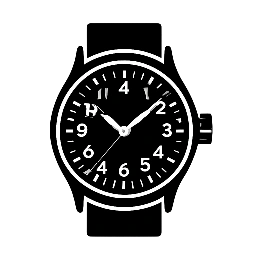
Key Takeaways
- Pilot watches from brands like IWC, Stowa, and Laco carry significant historical value as they were original suppliers to military forces during WWII
- The B-Uhr (Beobachtungsuhren) design remains the foundation for modern pilot watches, with features like oversized crowns and high legibility that were critical for navigation
- Breitling’s Navitimer revolutionized aviation timekeeping with its slide rule bezel that allowed pilots to perform crucial flight calculations
- Cartier’s Santos watch, created in 1904, holds the distinction of being the first purpose-built wristwatch specifically designed for pilots
- Building a historically significant pilot watch collection requires understanding the authentic heritage behind each brand rather than being swayed by marketing narratives
The world of pilot watches represents one of the most compelling intersections of functionality and history in horology. Unlike many watch categories that evolved primarily for aesthetic reasons, pilot watches were born from genuine necessity during the dawn of aviation. Today, these timepieces serve as tangible connections to pivotal moments in both aviation and watchmaking history, making them especially prized among collectors who value authentic heritage.
The Flight of Time: Why Pilot Watches Matter to Collectors
Pilot watches stand apart in the horological landscape as instruments that once meant the difference between life and death. When navigation systems were rudimentary, pilots relied on these precision timepieces to calculate position, fuel consumption, and flight speed. This fundamental utility established a design language characterized by exceptional legibility, robust construction, and intuitive operation – elements that continue to define the category today. For collectors, these watches tell stories of human achievement, technological advancement, and military history, offering a connection to the golden age of aviation that few other artifacts can match.
Military Heritage vs Fashion Statements
The distinction between historically significant pilot watches and those merely inspired by aviation aesthetics represents a crucial consideration for serious collectors. True pilot watches were commissioned by military forces with strict specifications that prioritized functionality over form. These timepieces featured oversized cases for legibility, large onion crowns manipulable with gloved hands, and anti-magnetic properties to withstand cockpit instruments. By contrast, many contemporary “pilot-style” watches merely appropriate these visual cues without the underlying purpose or historical significance. Discerning collectors typically gravitate toward brands with documented military provenance and those that maintain fidelity to original designs rather than those that simply adopt pilot watch styling as a marketing angle.
Investment Potential of Historical Pilot Watches
Beyond their historical significance, pilot watches from heritage manufacturers have demonstrated remarkable investment stability over time. Original examples from WWII-era manufacturers command premium prices at auction, often appreciating substantially despite broader market fluctuations. Even modern reissues from historically significant brands tend to hold value better than their counterparts without authentic aviation connections. This investment potential stems from three primary factors: limited original production numbers, documented historical importance, and enduring design appeal that transcends passing fashions. For collectors seeking timepieces that combine wearability with investment wisdom, historically significant pilot watches offer compelling advantages over purely decorative luxury watches.
The Big Five: Original WWII Flieger Manufacturers
The cornerstone of any serious pilot watch collection begins with understanding the “Big Five” – the original manufacturers commissioned by the German Luftwaffe to produce the now-iconic B-Uhr (Beobachtungsuhren or observation watches) during World War II. These five manufacturers – IWC, Stowa, Laco, Wempe, and A. Lange & Söhne – created timepieces to exacting military specifications that would forever define what constitutes an authentic pilot watch. With cases measuring 55mm in diameter, these watches featured exceptional legibility, hacking seconds for precise synchronization, and anti-magnetic protection critical for accurate navigation. Today, pieces from these original manufacturers represent the gold standard in pilot watch collecting, with each brand carrying forward their heritage in different ways.
The B-Uhr Specification: The German Luftwaffe commissioned these watches with extraordinarily specific requirements. Each featured a 55mm case, manual-wind movement with central seconds, hacking function, anti-magnetic protection, and a distinctive dial in either Type A (with Arabic numerals from 1-11 and a triangle at 12) or Type B (featuring an inner hour track and outer minute track). These specifications weren’t merely aesthetic choices but critical functional requirements for aerial navigation.
IWC: From Military Supplier to Luxury Icon
Among the original Flieger manufacturers, International Watch Company (IWC) has perhaps most successfully translated its military heritage into contemporary luxury relevance. The company’s journey began during WWII when it produced the now-legendary B-Uhr models for the German Luftwaffe. Unlike some German manufacturers whose facilities were damaged or repurposed after the war, IWC’s Swiss location allowed it to maintain production continuity. This historical foundation provided the backbone for what would eventually become one of the most prestigious pilot watch collections in modern horology.
IWC’s modern pilot watch collection, anchored by the Big Pilot’s Watch, represents a direct evolutionary line from these wartime origins. While significantly more refined than their utilitarian ancestors, today’s IWC pilot watches maintain key design elements like the distinctive triangle with dots at 12 o’clock, highly legible Arabic numerals, and sword-shaped hands. The brand has masterfully balanced historical authenticity with contemporary luxury expectations, offering movements with impressive specifications while honoring the functional roots that make these timepieces historically significant.
- The Big Pilot (introduced in 2002) faithfully recreates the oversized crown and general proportions of the original B-Uhr while incorporating modern luxury watchmaking standards
- The Mark series traces its lineage to the legendary Mark XI, commissioned by the British Ministry of Defense in 1948
- Special editions like the “Le Petit Prince” and “Antoine de Saint-Exupéry” models connect to literary aviation heritage
- The Spitfire collection pays homage to the iconic British fighter aircraft with vintage-inspired aesthetics
Stowa: Authentic Heritage in Modern Form
Stowa represents perhaps the purest connection to original Flieger heritage available at accessible price points. Founded in 1927 by Walter Storz, this German manufacturer was among the select few commissioned to produce B-Uhr watches for Luftwaffe pilots. Unlike some heritage brands that have been acquired by luxury conglomerates, Stowa maintains its independence and commitment to historical accuracy. Under the stewardship of Jörg Schauer since 1996, the company continues to produce faithful interpretations of its military classics while incorporating modern manufacturing standards.
What distinguishes Stowa in the collector’s market is its remarkable balance of historical authenticity and value. The company’s Flieger Classic and Flieger Classic Sport models maintain direct visual lineage to the original B-Uhr designs, featuring the characteristic black dial, white Arabic numerals, and sword hands that defined the genre. While modern Stowa watches are smaller than the original 55mm behemoths (typically ranging from 40-43mm), they preserve the essential legibility and design language that made the originals so effective as navigational tools. For collectors seeking historically significant pilot watches without venturing into luxury price territories, Stowa offers perhaps the most authentic connection to genuine aviation heritage.
Modern Stowa Flieger watches are available in both Type A and Type B dial configurations, staying true to the original military specifications while making concessions to contemporary wearability. The company’s transparent approach to its history—acknowledging both the engineering achievement and the complicated legacy of producing instruments for the Luftwaffe—has earned respect from serious collectors who value historical context and authenticity. This combination of historical significance, design fidelity, and approachable pricing makes Stowa an essential brand for collectors building a historically meaningful pilot watch collection.
Laco: Original B-Uhr Maker with Accessible Options
Laco (originally Lacher & Co) stands as one of the most historically significant yet accessible entry points into authentic pilot watch collecting. Founded in 1925 in Pforzheim, Germany, Laco was among the elite five manufacturers commissioned to produce B-Uhr watches for the Luftwaffe. Unlike some of its contemporaries, Laco has maintained production of pilot watches throughout most of its history, creating an unbroken lineage that appeals strongly to collectors who value authentic heritage. For those interested in exploring Laco’s offerings, the Aachen 42 MB is a notable model that reflects their commitment to quality and tradition.
What distinguishes Laco in today’s market is its commitment to producing faithful reproductions at various price points, making historically accurate pilot watches available to collectors at different stages of their journey. The company’s Replica line represents perhaps the most historically accurate mass-produced recreations of the original B-Uhr designs available, featuring hand-wound movements, period-correct styling, and case finishing that closely approximates the 1940s originals. For collectors unable to acquire genuine WWII-era examples (which can command five-figure prices when they rarely appear at auction), these reproductions offer an authentic connection to aviation history.
Beyond their strict historical recreations, Laco offers modernized interpretations that maintain the essential design language while incorporating contemporary sizing and materials. Models in their Basic and Pro lines feature more wearable dimensions (typically 39-45mm versus the original 55mm) while preserving the iconic dial layouts, distinctive hands, and oversized crowns that define authentic Flieger watches. This approach has earned Laco particular respect among collectors who appreciate historical significance but require watches suitable for regular wear.
Wempe: The Hamburg Connection
While less prominent in today’s pilot watch landscape than some of its contemporaries, Wempe occupies a unique position in aviation timepiece history as both a manufacturer and retailer of distinction. Founded in 1878 as a jewelry store in Hamburg, Wempe’s expertise in precision timekeeping led to its selection as one of the five manufacturers authorized to produce B-Uhr watches during WWII. The company’s Hamburg location was strategically valuable, as it allowed for close coordination with Luftwaffe operations centered in northern Germany.
Today, Wempe operates as both a prestigious retailer of luxury timepieces and a manufacturer producing its own Zeitmeister and Chronometerwerke collections. While their contemporary offerings extend beyond purely aviation-focused designs, their pilot watches carry the distinction of being produced by one of the original B-Uhr manufacturers. For collectors focused on historical significance, vintage Wempe-signed examples represent important artifacts from aviation history, though they appear less frequently at auction than pieces from makers like Laco or IWC.
Lange & Söhne: The Rarest of the B-Uhr Makers
A. Lange & Söhne presents perhaps the most intriguing historical trajectory among the original B-Uhr manufacturers. Based in Glashütte, the heart of German watchmaking, Lange produced some of the most technically refined observation watches during WWII. However, the company’s post-war story dramatically diverges from its counterparts. Following the war, Glashütte fell within Soviet-controlled East Germany, and the Lange company was expropriated in 1948, effectively ending its original incarnation. For those interested in exploring other historical pilot watches, the Wurzburg 42.5 mm handwinding model offers a fascinating glimpse into the craftsmanship of the era.
The brand remained dormant until 1990 when, following German reunification, Walter Lange (great-grandson of founder Ferdinand Adolph Lange) re-established the company. Today’s A. Lange & Söhne focuses primarily on haute horlogerie rather than tool watches, making no direct modern equivalents to their historical pilot watches. This absence of contemporary interpretations makes original Lange B-Uhr examples exceptionally valuable to collectors, representing not just aviation history but a watchmaking legacy interrupted by geopolitical forces.
For serious collectors, original A. Lange & Söhne B-Uhr watches represent the pinnacle of historical pilot watch collecting. These pieces rarely appear at auction, and when they do, they command premium prices reflecting both their technical excellence and their status as artifacts from a company whose original iteration was a casualty of 20th-century political division. While modern Lange produces some of the world’s finest watches, the connection to their pilot watch heritage exists primarily in historical documentation rather than contemporary products.
Breitling: Pioneering Aviation Instruments
While not among the original B-Uhr manufacturers, Breitling’s contribution to aviation horology represents a parallel and equally significant historical trajectory. Founded in 1884 by Léon Breitling, the company specialized in chronographs and precision timers from its inception. This expertise positioned Breitling perfectly to address the evolving needs of aviators during the 1930s and 1940s when flight was transitioning from experimental adventure to mainstream transportation and military application.
Unlike the German B-Uhr makers whose designs were dictated by military specifications, Breitling developed its aviation timepieces through close collaboration with pilots and airlines. This approach led to innovations specifically addressing the practical challenges of flight rather than conforming to government procurement standards. The company’s aviation heritage was cemented in 1942 when it introduced the Chronomat, featuring a circular slide rule that allowed pilots to perform crucial mathematical calculations mid-flight.
The Navitimer Revolution
Breitling’s most significant contribution to aviation timekeeping came in 1952 with the introduction of the Navitimer. This revolutionary chronograph expanded upon the Chronomat’s capabilities with a more sophisticated slide rule bezel specifically calibrated for aviation calculations. The name itself—a portmanteau of “navigation” and “timer”—reflected its intended purpose as a wrist-worn navigation computer. The Aircraft Owners and Pilots Association (AOPA) quickly adopted the Navitimer as its official timepiece, and its winged logo appeared on early dials, further cementing the watch’s aviation credentials.
What makes the Navitimer historically significant is how directly it addressed real-world aviation challenges before the widespread adoption of electronic calculators and navigation systems. Using the rotating bezel in conjunction with the chronograph functions, pilots could calculate critical information like fuel consumption, airspeed, distance traveled, rate of climb or descent, and conversion between different units of measurement. This functionality wasn’t merely decorative but essential for flight safety during an era when cockpit instrumentation was limited and often unreliable.
For collectors, the Navitimer represents a different but equally important strand of aviation watchmaking compared to the B-Uhr tradition. While the German observation watches were military instruments designed primarily for precise timekeeping and positional navigation, the Navitimer was a comprehensive tool that actively assisted in flight management. This history makes vintage Navitimers, particularly early examples with the AOPA wings logo, highly sought after by collectors who value functional aviation heritage.
Emergency Models and Real-World Rescues
Breitling further cemented its aviation legacy in 1995 with the introduction of the Emergency, the first wristwatch equipped with a built-in emergency microtransmitter. Operating on the international distress frequency of 121.5 MHz (later expanded to include the more advanced 406 MHz satellite frequency), this revolutionary timepiece was designed to serve as a backup rescue beacon for pilots and adventurers in life-threatening situations. Unlike other features in luxury watches that remain largely unused, the Emergency’s transmitter has been credited with facilitating several real-world rescues, most famously saving the lives of two British helicopter pilots who crashed in Antarctica in 2003. Learn more about the history of pilot watches and their significance in aviation.
The Emergency represents an important evolution in pilot watch functionality, acknowledging that modern aviation faced different challenges than those of early flight. While navigation calculations became less critical with the advent of electronic systems, survival equipment remained essential for pilots venturing into remote areas. For collectors interested in historically significant pilot watches, the Emergency offers a compelling modern chapter in the ongoing relationship between horology and aviation safety.
Zenith: From Louis Blériot to Modern Pilots
The connection between Zenith and aviation stretches back to the dawn of flight itself. In 1909, Louis Blériot made history as the first person to fly across the English Channel, with a Zenith timepiece strapped to his wrist. This pivotal moment established Zenith as an authentic pioneer in aviation timekeeping, predating even military specifications for pilot watches. Blériot’s personal endorsement—”I am very satisfied with my Zenith watch which I usually use and recommend it to everyone”—represents perhaps the earliest celebrity pilot endorsement in horological history.
Unlike manufacturers who entered aviation timekeeping through military contracts, Zenith’s relationship with flight began through the personal choice of pioneering aviators. This distinctive heritage gives the brand a unique position among historically significant pilot watch manufacturers, connecting directly to the romantic early days of aviation when flight was still considered a daring adventure rather than a military or commercial necessity.
The Type 20 Military Legacy
While Zenith’s aviation connection began with civilian pioneers, the company later secured its place in military aviation history through the development of the Type 20 chronograph. Commissioned by the French military in the 1960s, these timepieces adhered to strict specifications including a large 38mm case (considered oversized for the era), black dial with luminous numerals, flyback chronograph functionality, and accuracy requirements of within eight seconds per day. The “Type 20” designation itself came from the French Ministry of Defense specifications, creating a distinct lineage separate from the German B-Uhr tradition.
For collectors, original Zenith Type 20 chronographs represent important military aviation artifacts with documented service history. These watches served aboard aircraft like the Nord 1100 Norait and Dassault Mystère IV, making them true tools of aviation rather than merely aviation-inspired timepieces. This authentic military provenance distinguishes Zenith’s aviation heritage from brands whose connection to flight comes primarily through design aesthetics rather than actual cockpit service.
El Primero Movement Influence
Zenith’s contributions to pilot watch history took another significant turn with the introduction of the El Primero movement in 1969. As the first fully integrated automatic chronograph movement with a high-beat frequency of 36,000 vibrations per hour, the El Primero offered unprecedented precision for aviation timekeeping. While initially this groundbreaking movement wasn’t exclusive to pilot watches, its accuracy and reliability made it ideally suited for aviation applications where split-second timing could prove critical.
Today, Zenith’s Pilot collection carries forward this dual heritage of early aviation pioneering and military precision. Models like the Pilot Type 20 Extra Special combine vintage aesthetic elements with modern reliability, offering collectors a direct connection to both the romantic era of early flight and the technical excellence of military aviation timekeeping. For collectors prioritizing movements with historical significance, Zenith’s in-house El Primero chronographs represent important chapters in both aviation and horological advancement.
Longines: The Lindbergh Hour Angle Watch
Perhaps no pilot watch connects more directly to a singular achievement in aviation history than the Longines Hour Angle. Developed in collaboration with Charles Lindbergh following his historic 1927 solo transatlantic flight, this revolutionary timepiece addressed specific navigational challenges Lindbergh encountered during his journey. Unlike military-commissioned watches designed to general specifications, the Hour Angle emerged directly from the practical experience of perhaps the world’s most famous aviator, giving it unparalleled authenticity in the eyes of collectors who value direct connections to aviation milestones.
Charles Lindbergh’s Design Input
What distinguishes the Hour Angle in the landscape of historically significant pilot watches is the direct involvement of Lindbergh himself in its design. Following his transatlantic flight, Lindbergh approached Longines with specific ideas to create a navigational tool that would simplify the complex calculations required for celestial navigation. Working with Navy captain Philip Van Horn Weems (who had developed his own navigational system), Lindbergh specified features including a rotating bezel for longitude calculations and special dial markings for converting time to angular distance.
This collaboration resulted in a watch that solved practical problems encountered during actual long-distance flight, rather than adhering to standardized military requirements or marketing-driven design choices. For collectors, this direct connection to aviation problem-solving represents the purest expression of what makes pilot watches historically significant—they were genuine tools developed to address real challenges faced by aviators pushing the boundaries of what was possible.
How the Hour Angle Actually Works
The technical sophistication of the Hour Angle watch demonstrates why historically significant pilot watches often command premium prices among collectors who appreciate functional engineering. The watch’s specialized dial and bezel system allowed pilots to determine longitude through celestial observation without requiring complex mathematical calculations mid-flight. By setting the watch to Greenwich Mean Time and using the rotating bezel in conjunction with sextant readings, pilots could determine their position with remarkable accuracy during a time when radio navigation was limited and GPS nonexistent.
| Hour Angle Component | Function | Navigation Application |
|---|---|---|
| Rotating Outer Bezel | Adjusts for daily variations in solar time | Compensates for the equation of time |
| Inner Rotating Dial | Displays hours in degrees and minutes in arc-minutes | Converts time to angular position (15° per hour) |
| Centered Seconds Hand | Measures precise seconds | Critical for accurate celestial navigation timing |
For collectors focused on the technical heritage of pilot watches, the Hour Angle represents a fascinating intersection of horology and celestial navigation. Modern reproductions maintain the distinctive dial layout and bezel functionality, though few modern pilots would rely on these calculations in an era of satellite navigation. Nevertheless, the Hour Angle stands as perhaps the most sophisticated navigation-specific pilot watch ever created, making it a cornerstone piece for collections focused on historically significant aviation timepieces.
Building a Historically Significant Pilot Watch Collection
Creating a meaningful collection of historically significant pilot watches requires strategic thinking beyond simply acquiring recognizable names. The most respected collections typically demonstrate a coherent focus on particular historical periods, technical innovations, or military connections, rather than random accumulation of aviation-inspired designs. Whether focusing on original wartime examples, faithful modern recreations, or evolutionary adaptations, collectors should prioritize pieces that maintain authentic connections to genuine aviation history rather than merely appropriating aesthetic elements.
Authenticating Vintage Pieces
For collectors venturing into vintage territory, authentication represents perhaps the greatest challenge when acquiring historically significant pilot watches. The combination of high market values and relatively straightforward designs has made this category particularly vulnerable to counterfeiting, redials, and “Franken-watches” assembled from parts of different origins. Authentication requires examining multiple factors including case hallmarks, movement serial numbers, dial printing techniques, luminous material composition (particularly important for dating), and hand shapes. Original military examples typically feature case-back engravings with service numbers, though these too can be falsified. Serious collectors should invest in documentation including archive extracts from manufacturers, period photographs showing similar examples, and when possible, service records documenting the timepiece’s history.
Stratifying Your Collection Across Price Points
Building a comprehensive collection of historically significant pilot watches doesn’t necessarily require unlimited resources, provided collectors approach the category with strategic vision. At the entry level, modern productions from original manufacturers like Laco, Stowa, and Hamilton offer authentic heritage connections starting around $500-1,500. These pieces typically maintain design fidelity to historical models while incorporating modern manufacturing standards.
The mid-range tier ($2,000-8,000) opens access to higher-grade modern interpretations from historic makers including IWC, Breitling, and Zenith, along with the possibility of vintage examples from second-tier historical brands. At this level, collectors can acquire pieces featuring in-house movements, limited editions commemorating specific aircraft or squadrons, and vintage examples with documented service history.
True investment-grade historically significant pilot watches typically start above $10,000, encompassing rare original military-issued examples from the WWII era, early Breitling Navitimers with AOPA logos, original Longines Hour Angles, and limited production modern masterpieces from prestigious manufacturers. These high-end acquisitions should be approached with particular attention to authentication, provenance, and condition, ideally working with specialized dealers who provide certificates of authenticity and detailed condition reports.
Documentation and Provenance Importance
The value of historically significant pilot watches increases exponentially when accompanied by documentation establishing their provenance, particularly for military examples. Original issue papers, service records, period photographs showing the watch in use, and documented connections to specific pilots or squadrons transform a timepiece from merely a vintage object into a tangible piece of aviation history. Serious collectors should prioritize examples with clear documentation trails and, when acquiring particularly important pieces, consider creating detailed files including service records, authentication certificates, and historical research establishing the model’s significance in aviation history. This documentation not only supports authentication but enhances the storytelling aspect that makes historically significant pilot watches particularly compelling collectibles.
The Legacy Lives On: Modern Reissues Worth Owning
The enduring popularity of historically significant pilot watch designs has inspired manufacturers to create modern reissues that balance vintage authenticity with contemporary reliability. Unlike some watch categories where reissues often deviate substantially from their inspiration, the best pilot watch revivals maintain remarkable fidelity to their historical predecessors. This adherence to original designs reflects the fundamental truth that early pilot watches achieved near-perfect functionality for their intended purpose, leaving little room for improvement beyond material science and movement technology.
When Reissues Outshine Originals
In certain cases, modern reissues of historically significant pilot watches actually improve upon their inspirations while maintaining design integrity. IWC’s current Big Pilot watches offer water resistance, shock protection, and antimagnetic properties far exceeding their wartime ancestors, while preserving the distinctive aesthetic that makes them immediately recognizable as descendants of the original B-Uhr. Similarly, Zenith’s modern Pilot Type 20 collection delivers the visual impact of early aviation timepieces with the precision of contemporary El Primero movements.
For collectors unable or unwilling to accept the practical limitations of genuine vintage examples—including fragility, water vulnerability, and service challenges—these high-quality reissues offer compelling alternatives. The best examples honor their historical predecessors through careful attention to dial proportions, hand designs, and case profiles while subtly incorporating modern expectations regarding size, durability, and performance. This balance of respect for heritage with contemporary engineering makes modern reissues legitimate additions to historically focused collections rather than mere homages.
Limited Editions vs Regular Production
Within the realm of modern pilot watches with historical significance, manufacturers frequently release limited editions commemorating specific aviation milestones, aircraft, or squadrons. IWC’s “Le Petit Prince” series honors Antoine de Saint-Exupéry’s beloved novella while maintaining the fundamental design language of their historic pilot watches. Breitling’s “Aviation Pioneers Squad” limited editions connect to specific achievements in flight history while incorporating the brand’s aviation chronograph expertise.
While limited editions typically command premium prices and often appreciate more quickly than standard production models, collectors should evaluate these releases based on their meaningful connections to aviation history rather than merely their artificial scarcity. The most collectible limited editions typically feature unique design elements referencing specific historical aircraft, missions, or pilots, creating a substantive link to aviation heritage beyond merely numbered casebooks or decorative engravings. For collections focused on historical significance, limited editions that tell specific aviation stories often prove more meaningful than those distinguished only by cosmetic variations or arbitrary production limits.
Frequently Asked Questions
The world of historically significant pilot watches encompasses numerous specialized terms, technical features, and historical references that can challenge even experienced collectors. The following questions address common points of confusion while providing guidance for collectors at various stages of their journey through aviation timepieces.
What makes a watch a true “pilot’s watch” versus just aviation-inspired?
Authentic pilot watches originate from documented use in actual aviation contexts rather than merely adopting design elements associated with flight. True pilot watches typically feature specific functional elements addressing aviation needs: exceptional legibility under variable lighting conditions, precision movements with hacking seconds for synchronization, antimagnetic protection to withstand cockpit instruments, and oversized crowns manipulable while wearing gloves. Additionally, historically significant pilot watches connect to specific aviation contexts—military specifications, pilot collaborations, or documented use during notable flights.
By contrast, watches merely “inspired” by aviation typically appropriate aesthetic elements without the underlying functional purpose or historical connection. These pieces might feature altimeter-style dials, decorative propeller motifs, or aviation-themed engravings without incorporating the technical features that made genuine pilot watches essential tools. While these design-focused interpretations might be attractive timepieces, they lack the historical significance that makes true pilot watches compelling to serious collectors.
The distinction becomes particularly important when evaluating value and investment potential. Watches with documented aviation history—whether original military examples or modern pieces from manufacturers with authentic heritage—typically hold value better than those whose connection to flight exists primarily through marketing narratives rather than historical reality.
Are vintage pilot watches still reliable for daily wear?
Vintage pilot watches present specific challenges for daily wear, though their robustness compared to other watch categories reflects their original purpose as functional tools rather than decorative accessories. Original military examples from WWII era manufacturers were designed for cockpit conditions, with shock resistance and antimagnetic properties superior to contemporary dress watches. However, these 70+ year-old timepieces typically lack water resistance by modern standards, feature acrylic crystals vulnerable to scratching, and contain movements requiring more frequent service than modern alternatives. Collectors intending to wear vintage pilot watches regularly should budget for professional servicing every 3-5 years and exercise caution regarding exposure to moisture, magnetic fields, and physical shocks.
How can I verify if a WWII-era pilot watch is authentic?
Authenticating WWII-era pilot watches requires multi-faceted assessment beyond merely comparing visual elements to reference images. Case materials should match known production standards—typically nickel-chrome alloys or stainless steel rather than precious metals. Movement serial numbers should correspond to documented production periods for the specific model, with appropriate finishing techniques visible under magnification. Dial printing should demonstrate era-appropriate techniques with correct font shapes, spacing, and logo designs matching known examples.
For military-issued examples, case backs typically feature service numbers, issue dates, and military branch markings that can be cross-referenced with historical records. Luminous material composition provides another authentication clue—genuine WWII examples used radium-based compounds with distinctive aging patterns different from later tritium or modern SuperLuminova. When significant investments are involved, collectors should insist on authentication certificates from recognized experts, preferably with supporting documentation from brand archives where available.
Which historically significant pilot watches offer the best investment potential?
Investment potential in historically significant pilot watches correlates strongly with four key factors: authentic aviation history, original condition, documented provenance, and production scarcity. Original B-Uhr examples from the five authorized manufacturers consistently appreciate, particularly those with military markings and matching serial numbers. Early Breitling Navitimers with AOPA logos from the 1950s and early 1960s have demonstrated strong value growth, especially when accompanied by original documentation.
For collectors with more limited budgets, certain modern limited editions from historically significant manufacturers can offer investment potential, particularly those commemorating specific aviation milestones or featuring design elements unlikely to be repeated in future productions. The key consideration for investment-focused collecting should always be authentic connection to aviation history rather than merely limited production numbers or marketing narratives. Watches with documented links to specific pilots, aircraft, or historical flights typically outperform those distinguished only by cosmetic variations or arbitrary “limited edition” designations.
Should collectors focus on original designs or are modern interpretations equally valuable?
The relative value of original designs versus modern interpretations depends largely on the collector’s motivations and the specific historical significance of the timepieces under consideration. From a pure investment perspective, original examples in good condition with documented provenance typically offer stronger appreciation potential, particularly for historically significant models with military connections. These pieces represent irreplaceable artifacts from pivotal aviation periods, with finite supply and growing collector demand.
However, modern interpretations from historically significant manufacturers offer compelling advantages for collectors prioritizing wearability or concerned about the fragility of vintage examples. The best modern reissues maintain design fidelity to their historical inspirations while incorporating contemporary expectations regarding water resistance, shock protection, and service intervals. For collections focused on specific historical themes—such as tracking the evolution of Breitling’s chronograph technology or IWC’s pilot watch development—combining vintage examples with their modern descendants can create compelling narratives showcasing both continuity and advancement.
Ultimately, the most respected collections of historically significant pilot watches typically combine carefully selected vintage pieces representing pivotal moments in aviation timekeeping with high-quality modern examples demonstrating how this rich heritage continues to influence contemporary horology. This balanced approach honors the category’s functional roots while acknowledging the ongoing relevance of designs that have proven their value through decades of aviation advancement. For those enthralled by the intersection of timekeeping and flight, these timepieces offer tangible connections to one of humanity’s greatest achievements—the conquest of the skies. Explore models like the Kiel 2 MB Schwarz to see how these designs continue to evolve.
Leave a Reply